



The Role of Power Quality in Effective Equipment Monitoring
 19/11/2025

 Back to Articles

Facility performance depends on more than just the health of the equipment itself. Even the most advanced machinery can experience unexpected failures or inefficiencies when the power
feeding it is unstable. Monitoring both equipment and incoming power is essential for gaining a complete understanding of system performance and ensuring long-term reliability. Power quality directly influences how accurately data reflects equipment conditions and how effectively maintenance teams can prevent issues before they escalate.
Understanding Power Quality and Its Impact
Power quality refers to the stability, consistency, and cleanliness of the electrical supply entering a facility. When voltage, current, or frequency deviate from normal parameters, equipment performance can suffer. Common disturbances include voltage sags, harmonics, transients, and imbalances.
These irregularities may not cause immediate shutdowns, but over time they degrade sensitive components, shorten motor life, and lead to unexplained trips or resets. Poor power quality also skews monitoring data, making it harder for maintenance teams to identify whether a problem stems from the equipment or from the supply feeding it.
Why Power Quality Monitoring Complements Equipment Monitoring 
Traditional equipment monitoring focuses on the asset’s internal performance such as motor speed, current draw, temperature, and vibration. However, this data only tells part of the story. When electrical disturbances are present, they can mask or mimic equipment faults. Without monitoring the incoming power, facility teams may misdiagnose the source of the issue, resulting in unnecessary repairs or downtime.
Monitoring both equipment and power quality offers three key advantages:
-
Accuracy: Power quality data helps isolate whether performance issues are caused by the asset itself or by supply fluctuations.
-
Protection: Detecting poor power conditions early protects sensitive electronics, drives, and control systems from long-term damage.
-
Optimization: Stable power ensures that predictive models and AI-driven tools analyze clean, reliable data for accurate forecasting.
Together, these insights enable more effective decision-making and reduce the risk of hidden inefficiencies that drain productivity.
How Power Quality Affects Predictive Maintenance 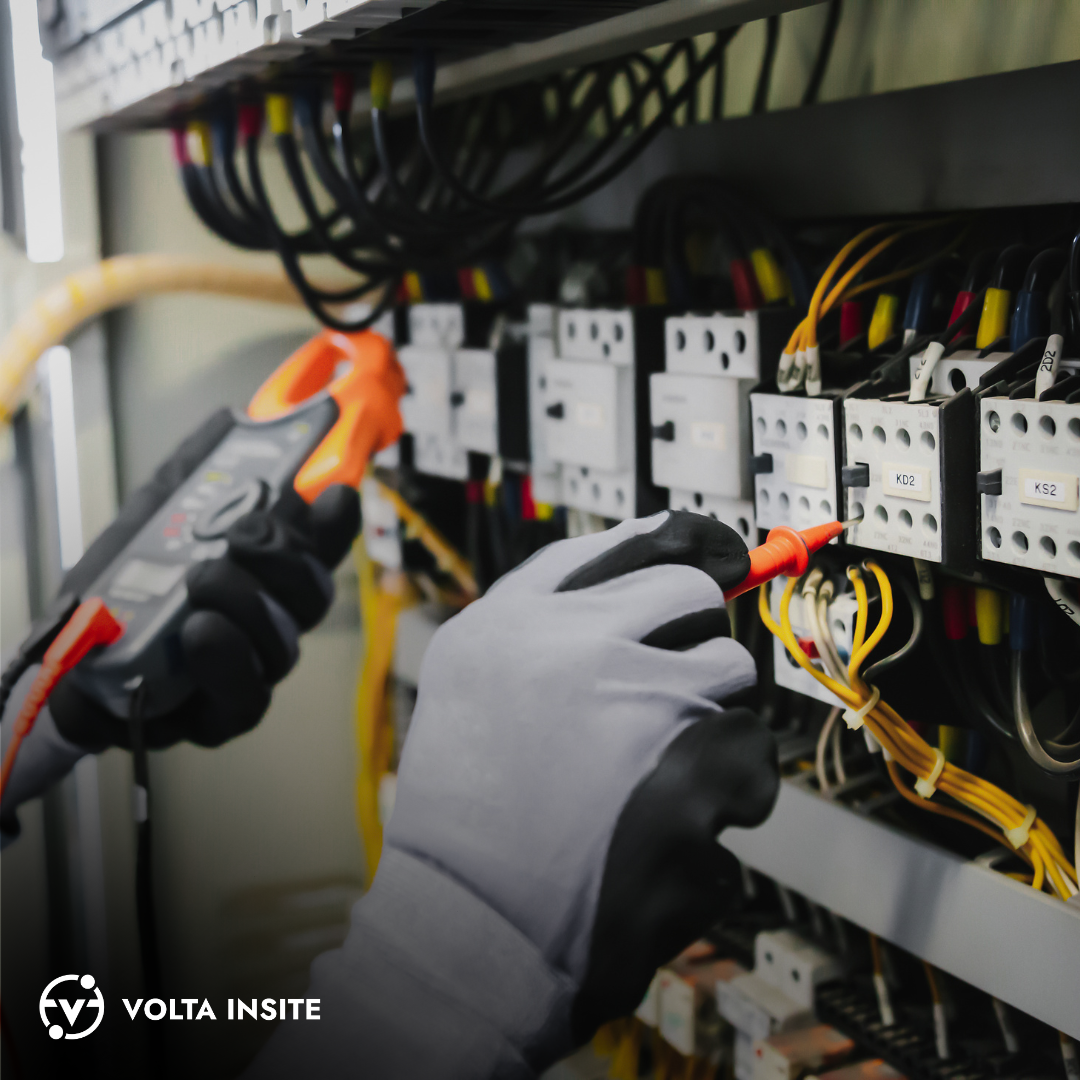
Predictive maintenance depends on accurate, consistent data to identify small performance deviations before failure occurs. If power fluctuations distort readings, AI algorithms may generate false alerts or miss critical warning signs altogether. Monitoring power quality ensures that predictive systems like Volta Insite’s InsiteAI receive valid information about equipment conditions.
For example, voltage sags might cause a variable frequency drive to trip, appearing as a mechanical fault when the real issue originates upstream in the electrical system. By tracking both sources, facility teams can pinpoint the exact cause and correct it without unnecessary downtime.
Building a Complete Picture with Volta Insite
Effective equipment monitoring requires visibility into both sides of the equation: the assets themselves and the power that drives them. Volta Insite provides the technology to make that possible.
With intelligent Node sensors and advanced electrical signature analysis, Volta Insite continuously monitors equipment health while assessing incoming power quality. InsiteAI processes this data in real time, detecting patterns and identifying whether anomalies originate from the equipment or the electrical source.
This dual-layer approach ensures accuracy, protects valuable assets, and gives facility managers the confidence to act before issues disrupt operations. When equipment monitoring and power quality analysis work together, facilities gain the insight needed to maintain reliable, efficient systems year-round.
Related:
How to Monitor and Mitigate Power Drops in Your Facility
Detecting Power Quality Issues Inside vs Outside Your Facility
How Volta Insite Detects Power Quality Issues and Transient Events